Fun fact
A newborn calf weighs about 30 pounds and can keep up with the herd just 2 to 3 hours after birth.
14 animals worth planning a trip around — the parks, the exact pullouts and trails, the best months, and how close is too close.
Every place, season and distance rule here comes from official National Park Service pages. Wildlife is wild: sightings are never guaranteed, and rangers always know what’s been seen lately.
Before you go
The National Park Service minimums. If an animal changes its behavior because of you, you’re too close — whatever the number.
At a glance
The 19 parks featured in this guide, and a month-by-month calendar of the big wildlife moments.
Approximate locations. Alaska is shown as an inset.
Dark orange marks the peak window named on park pages; light orange is shoulder season or “possible.”
| J | F | M | A | M | J | J | A | S | O | N | D | |
|---|---|---|---|---|---|---|---|---|---|---|---|---|
| Gray whales pass the coastOlympic | ||||||||||||
| Grizzlies roam thermal basinsYellowstone · spring | ||||||||||||
| Bison calves arriveYellowstone | ||||||||||||
| Bighorn sheep at Sheep LakesRocky Mountain | ||||||||||||
| Synchronous fireflies (lottery)Congaree · Smokies | ||||||||||||
| Humpback whales feedingGlacier Bay · Kenai Fjords | ||||||||||||
| Puffins nestingKenai Fjords | ||||||||||||
| Brown bears at Brooks FallsKatmai | ||||||||||||
| Bison rutYellowstone | ||||||||||||
| Bull moose gatherDenali · park road mi 9–13 | ||||||||||||
| Elk rut and buglingRocky Mountain · Smokies · Yellowstone | ||||||||||||
| ManateesBiscayne · colder months | ||||||||||||
| Alligators on the Anhinga TrailEverglades · winter | ||||||||||||
| Wolves on the northern rangeYellowstone · year-round |
The animals
For each: the best two or three parks, the specific spot, the best months and time of day, the official distance rule, and one fact to share in the car.
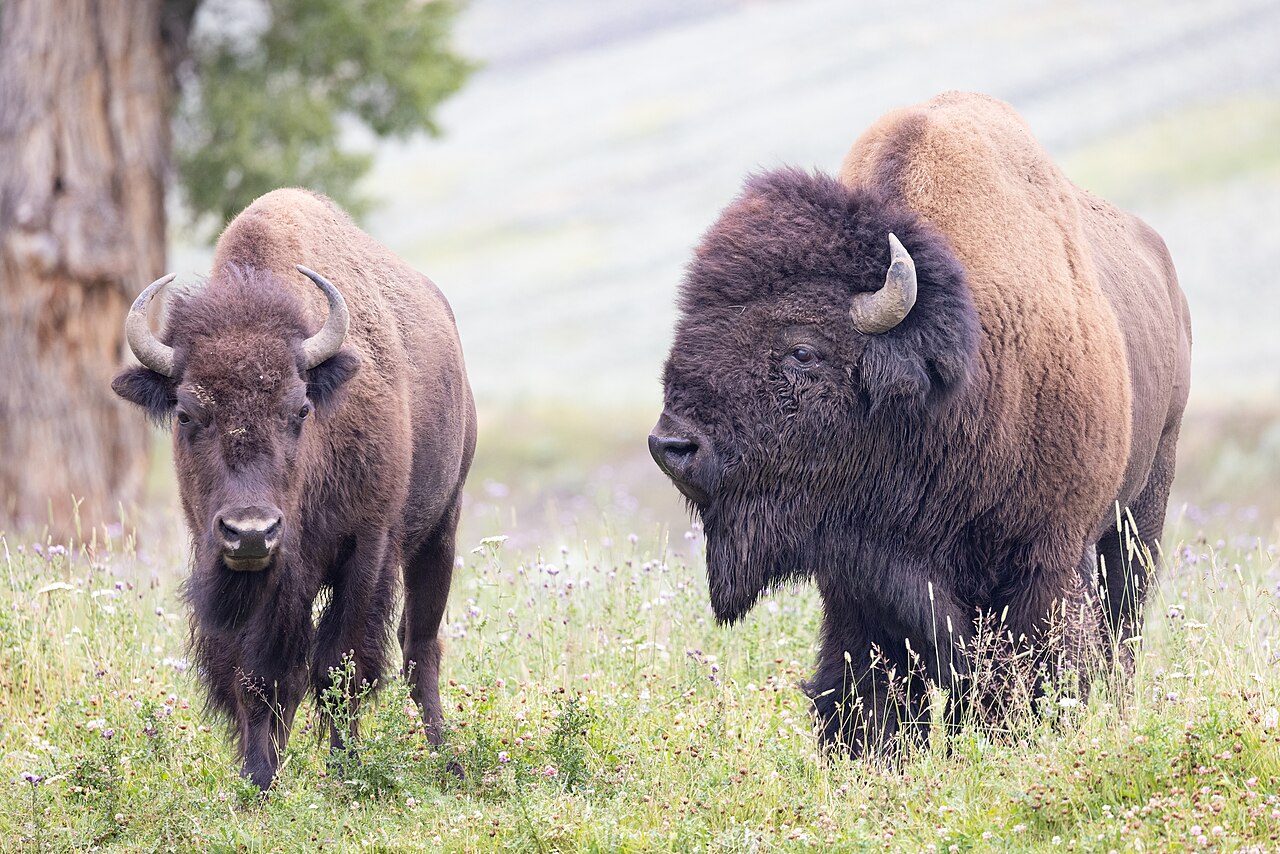
Photo: NPS / Jacob W. Frank
Year-round
The biggest land animal in North America, grazing in herds you can watch from the road.
Stay at least 25 yards (23 m) from bison. If one walks toward you, back away or turn around. NPS notes bison and elk have injured people.
A newborn calf weighs about 30 pounds and can keep up with the herd just 2 to 3 hours after birth.
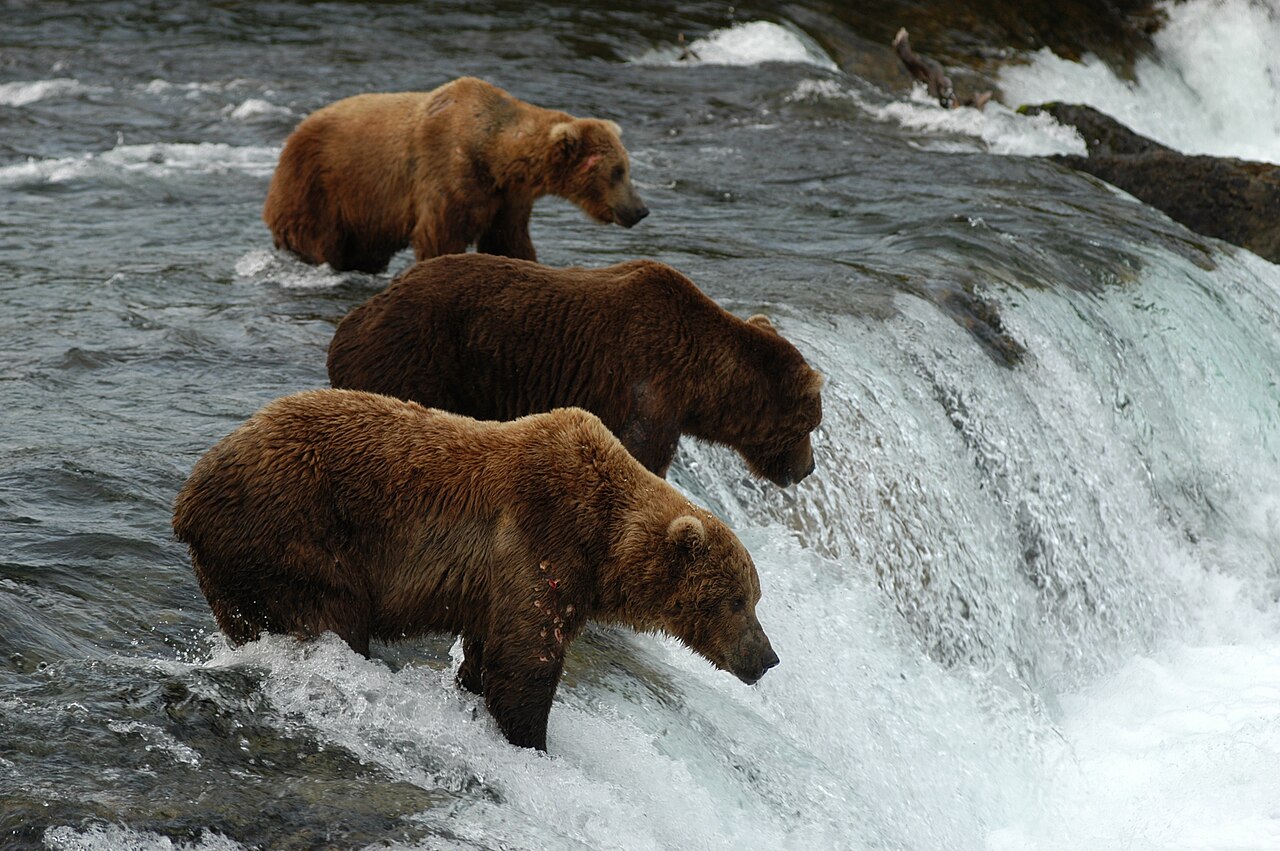
Photo: NPS
July & September
Watch bears snatch leaping salmon from a waterfall — from a raised viewing platform.
Katmai: it is illegal to approach within 50 yards of any bear, or to stay within 50 yards of one that is fishing. Yellowstone, Glacier and Grand Teton require 100 yards (91 m).
A Katmai brown bear must eat a full year’s worth of food in about six months to survive the winter.
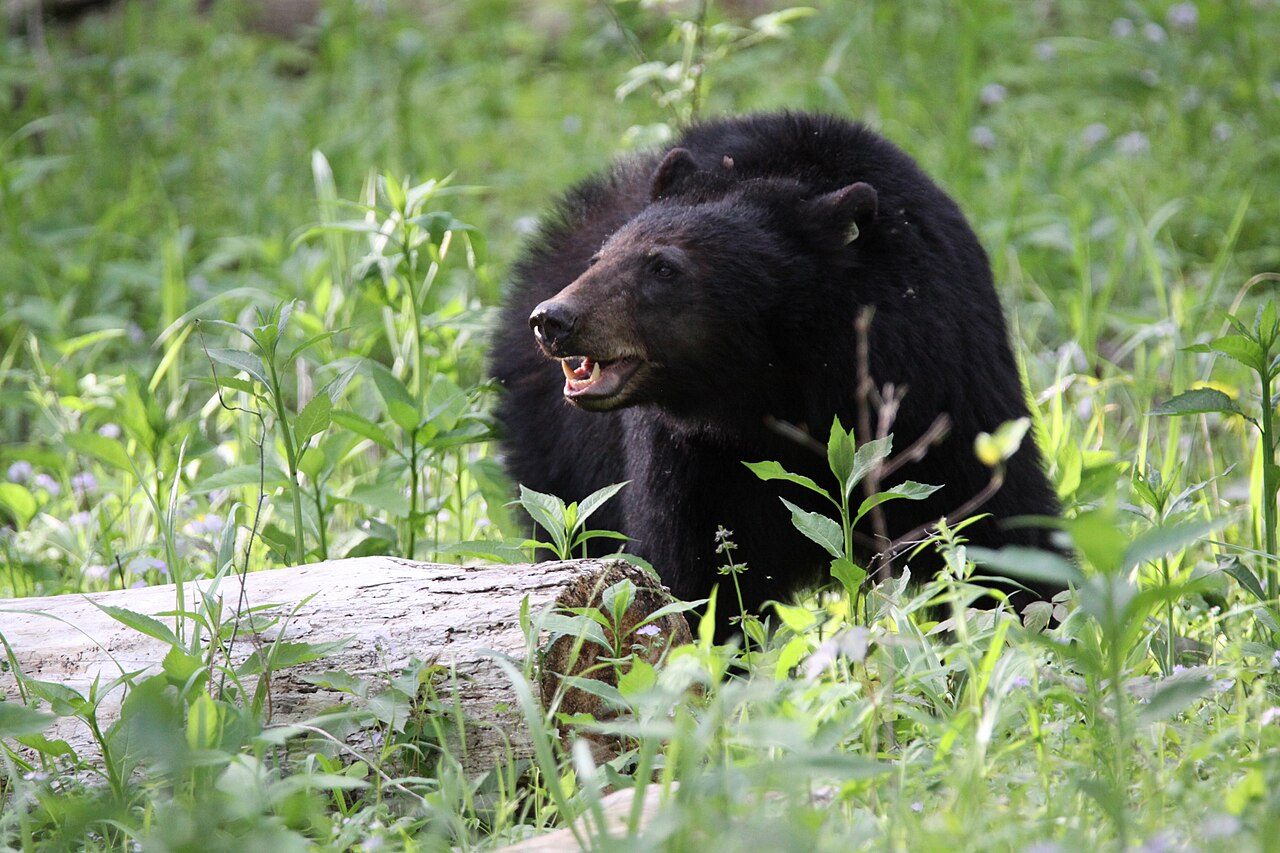
Photo: NPS / Warren Bielenberg
Spring to fall
The Smokies hold roughly 1,900 black bears — about two per square mile.
Smokies: willfully approaching within 50 yards (150 feet) of a bear is illegal. Sequoia & Kings Canyon ask for at least 100 yards (300 feet).
A black bear’s sense of smell is about seven times stronger than a bloodhound’s.
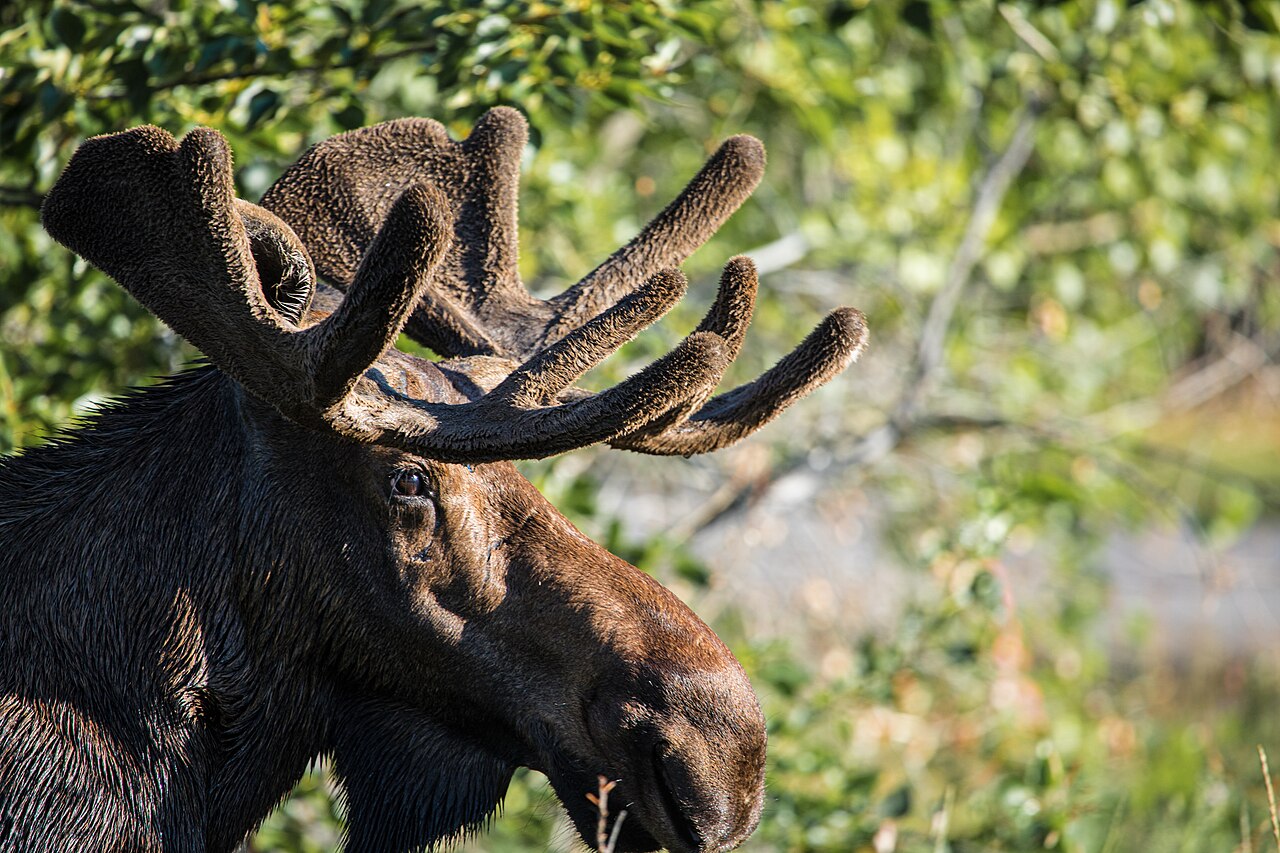
Photo: NPS
Spring to fall
The largest member of the deer family, browsing willows at the water’s edge.
Stay at least 25 yards (23 m) away — Denali calls it two bus lengths. Never get between a cow and her calf. Rocky Mountain advises about 120 feet (three bus lengths).
A moose can weigh three or four times as much as a Denali grizzly — and may charge if it feels threatened.
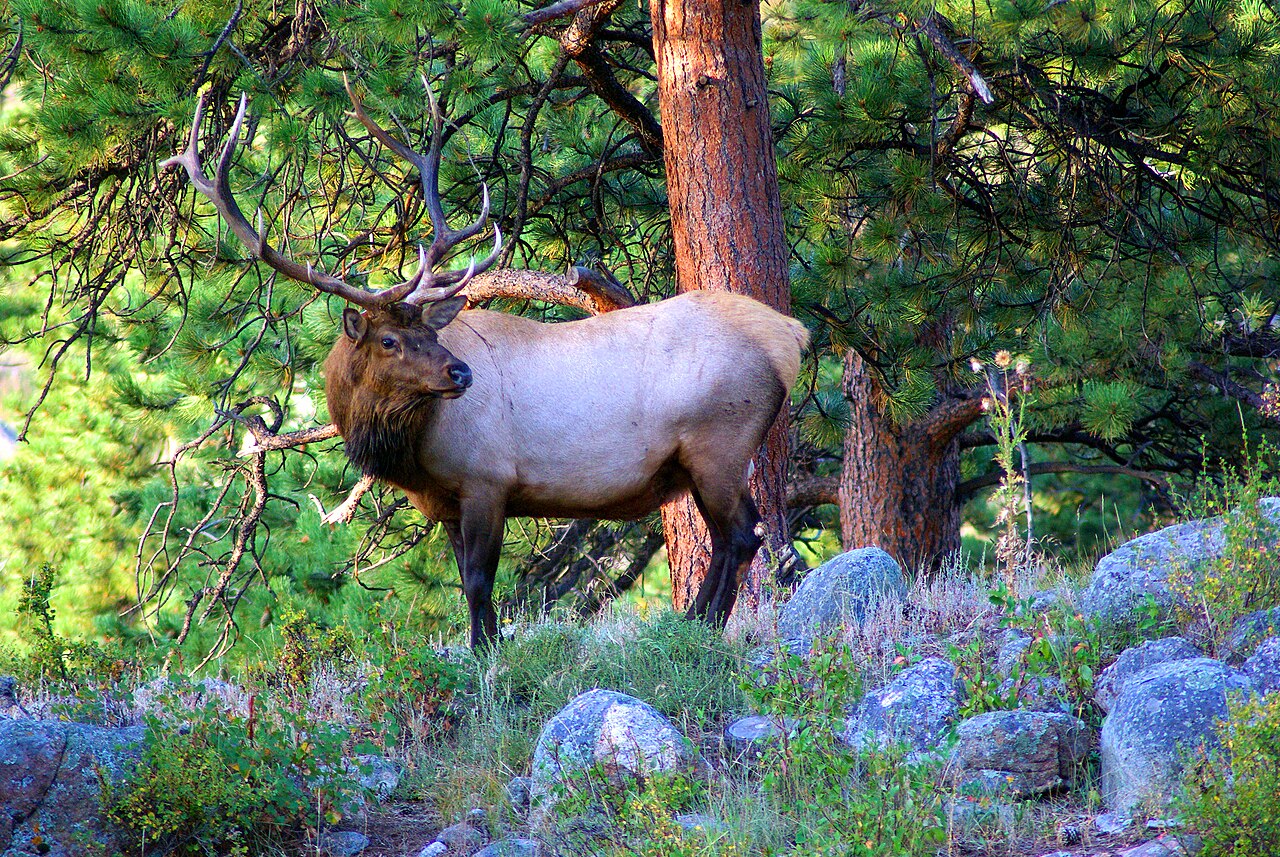
Photo: Mike Goad / CC0
Rut: Sep–Oct
Come in fall to hear bulls bugle across the meadows during the rut.
Yellowstone and the Smokies require 25 yards (23 m); Rocky Mountain asks 75 feet (about two bus lengths). Bulls in rut and cows with calves are most dangerous.
Bull elk antlers can grow up to an inch a day — and a mature bull’s rack can weigh up to 40 pounds.
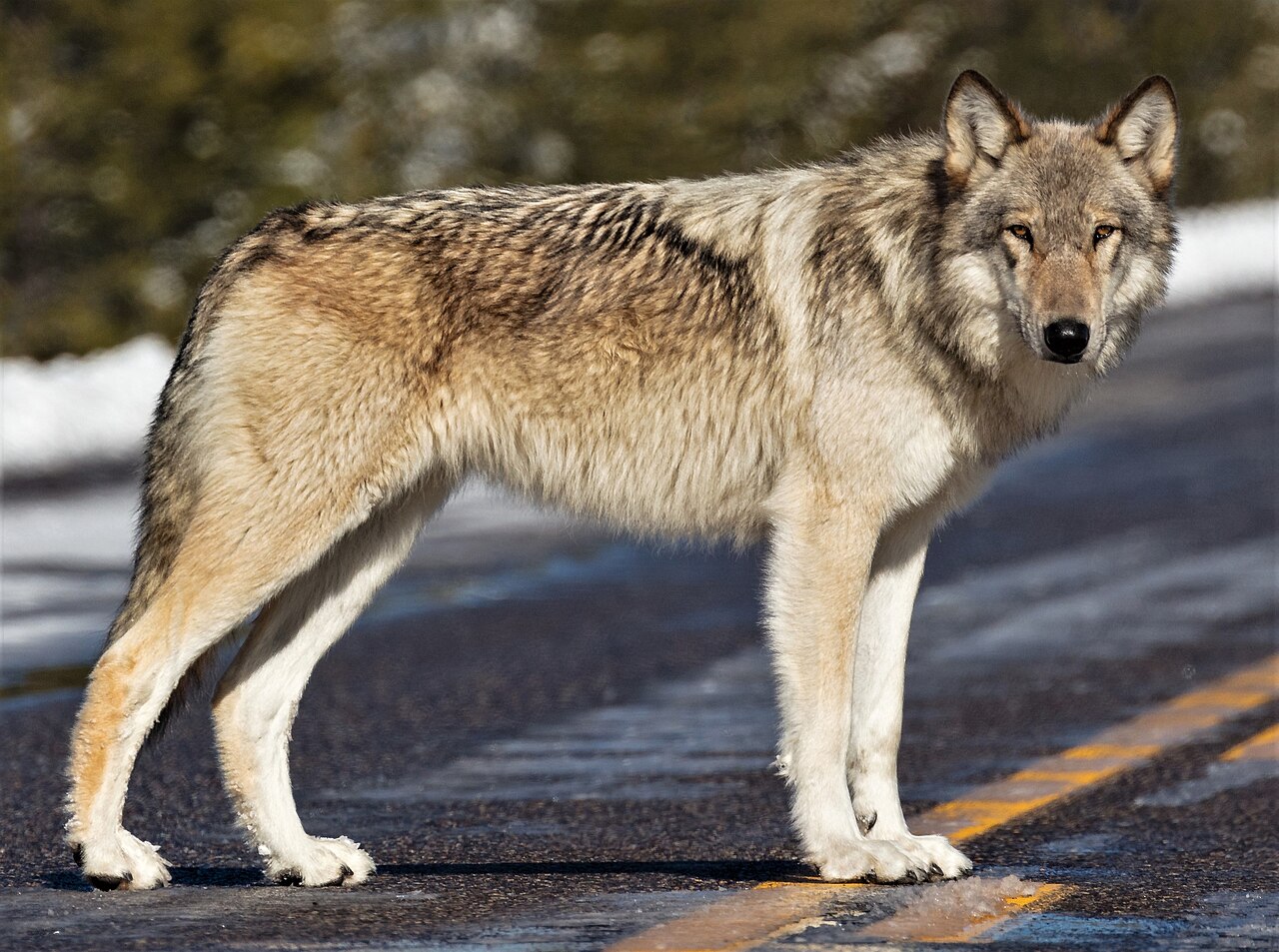
Photo: NPS / Jacob W. Frank
Year-round
Yellowstone’s northern range is one of the best places in the world to watch wolves.
Stay at least 100 yards (91 m) from wolves. Yellowstone asks you to use roadside pullouts and watch with binoculars or a telephoto lens.
About half of Yellowstone’s wolves are black; most of the rest are gray. The average pack has about 12 wolves.
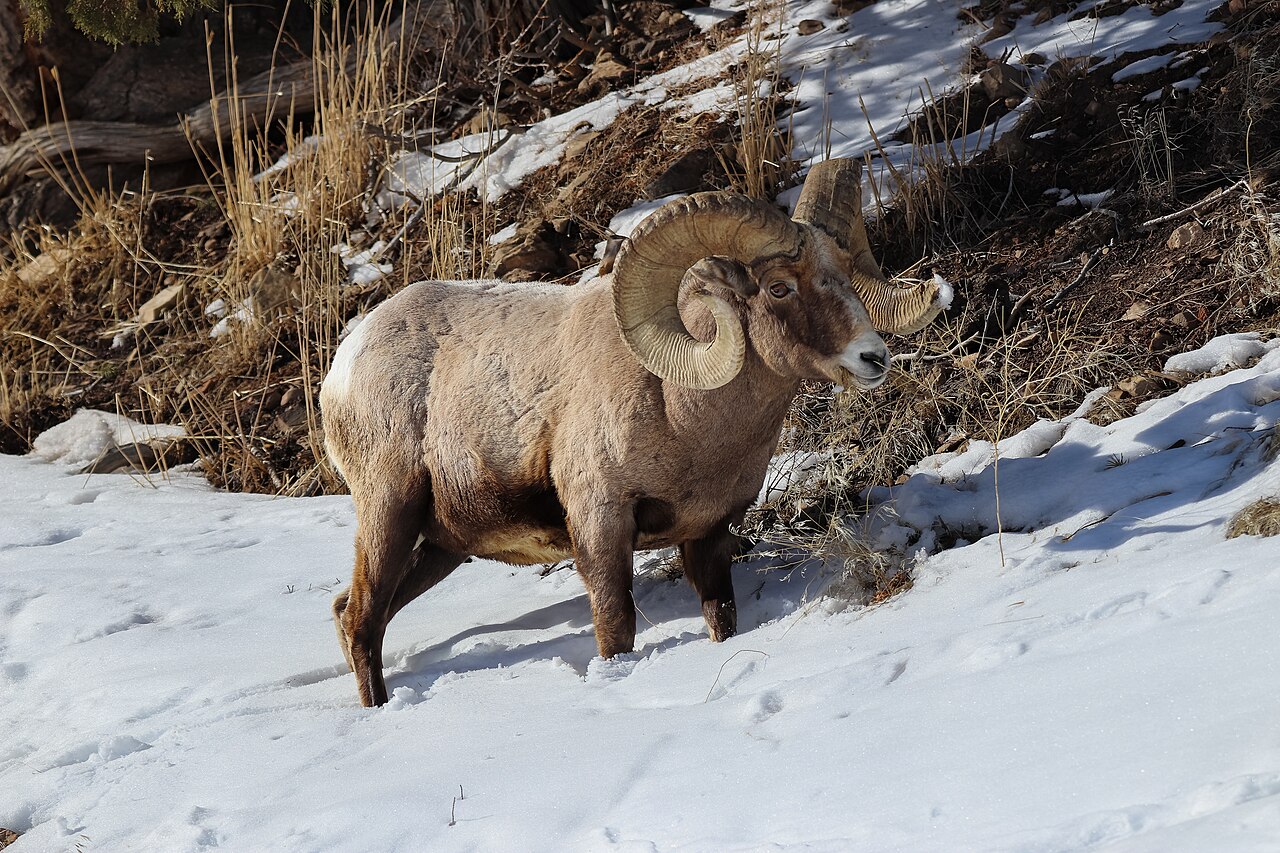
Photo: NPS / A. Falgoust
May–Aug
Watch bands of sheep cross the road to lick minerals from the soil.
Stay at least 25 yards (23 m) away. At Sheep Lakes, bands of up to 60 sheep cross the road from the north ridge — give them room to pass.
A male bighorn’s horns can weigh up to 30 pounds.
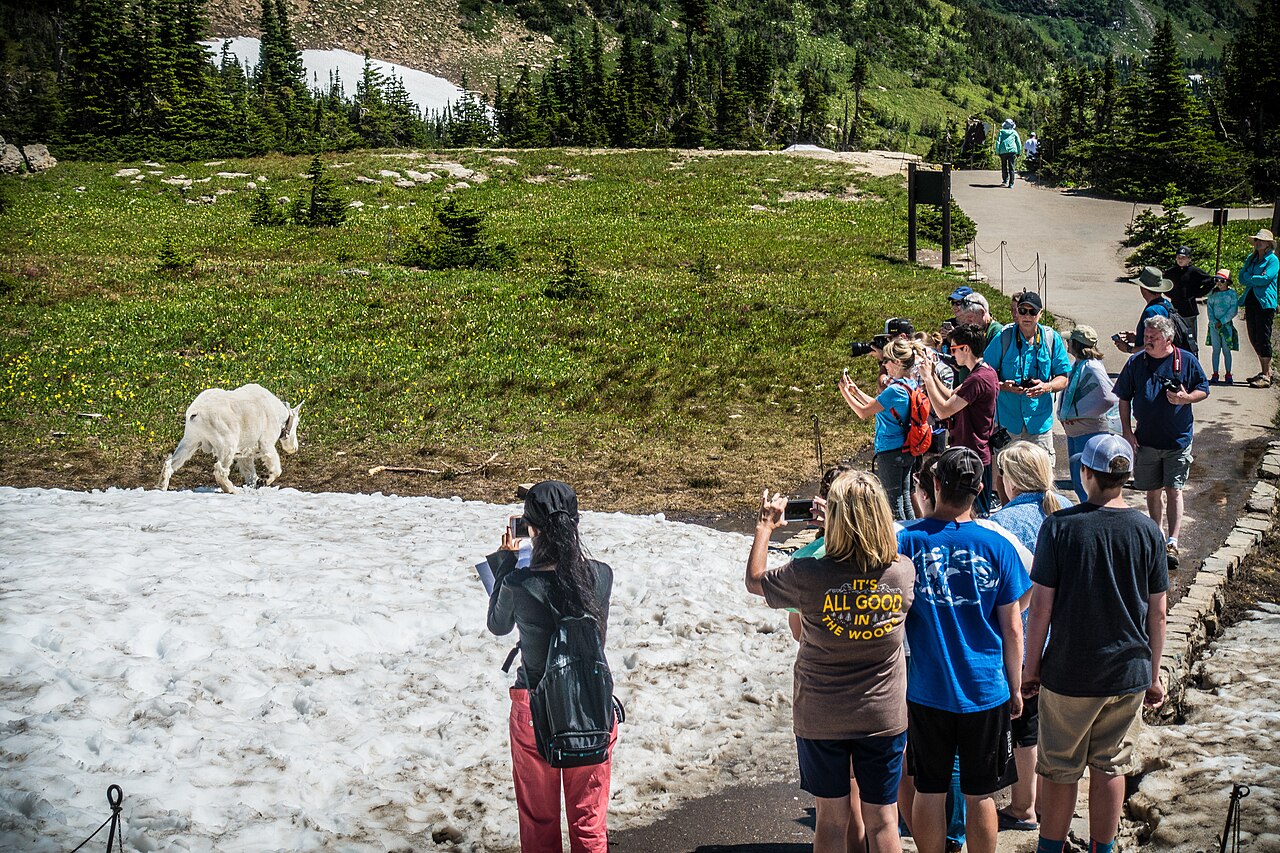
Photo: NPS
Summer
Cliff climbers that often wander right past the boardwalk at Logan Pass.
Glacier asks for at least 25 yards (75 feet) when photographing goats. Stay on the trail; if a goat moves toward you, move away.
Not a true goat: it’s the only living member of its genus, more closely related to Europe’s chamois. Two layers of wool keep it alive at −50°F.
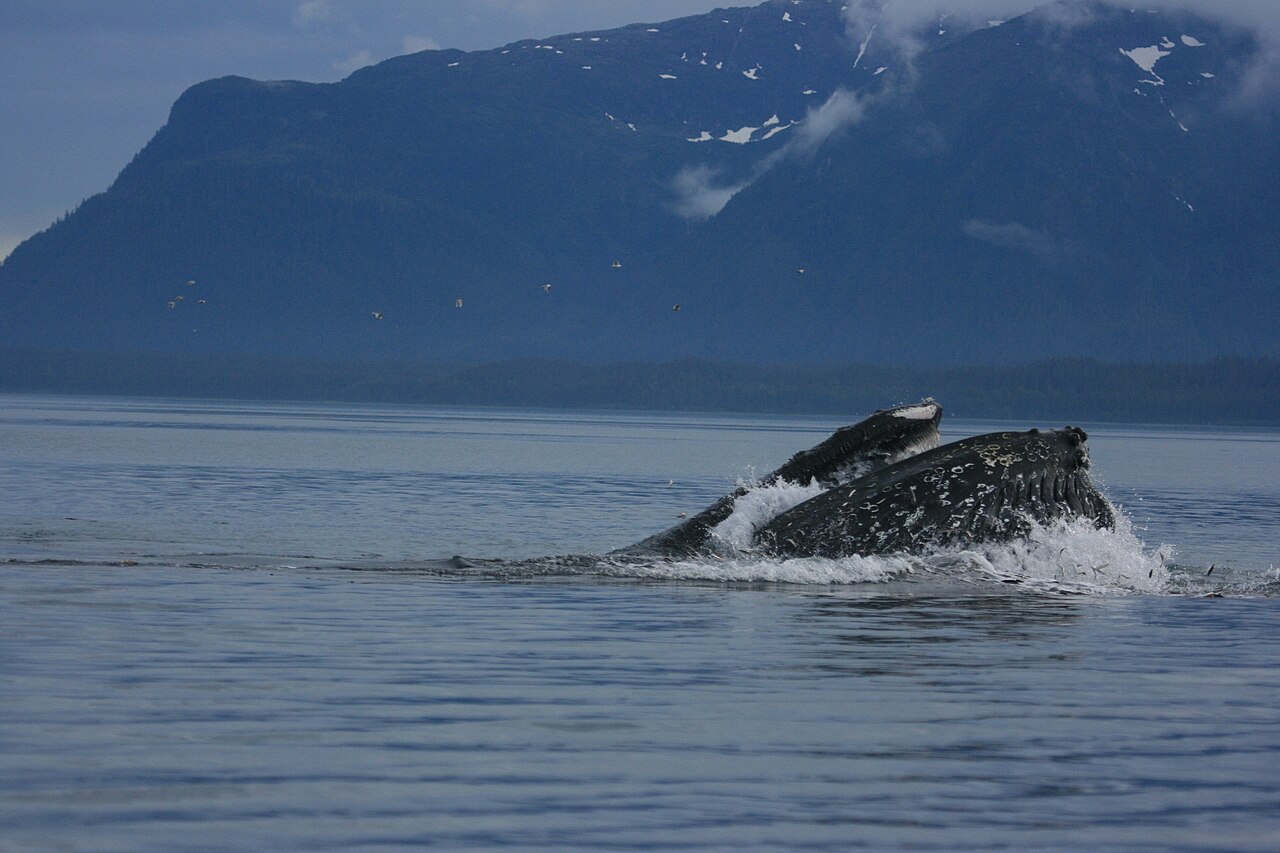
Photo: NPS
Mar–Sep
Humpbacks spend summer feeding in Alaska’s fjords; gray whales pass the Washington coast in spring.
In Alaska, boats may not approach within 100 yards of a humpback (NOAA rule). In Glacier Bay park waters, vessels — even kayaks — must stay ¼ nautical mile away.
Kenai Fjords’ humpbacks swim nearly 3,000 miles from Hawaii and Mexico to feed. Males sing songs that can last up to seven hours.
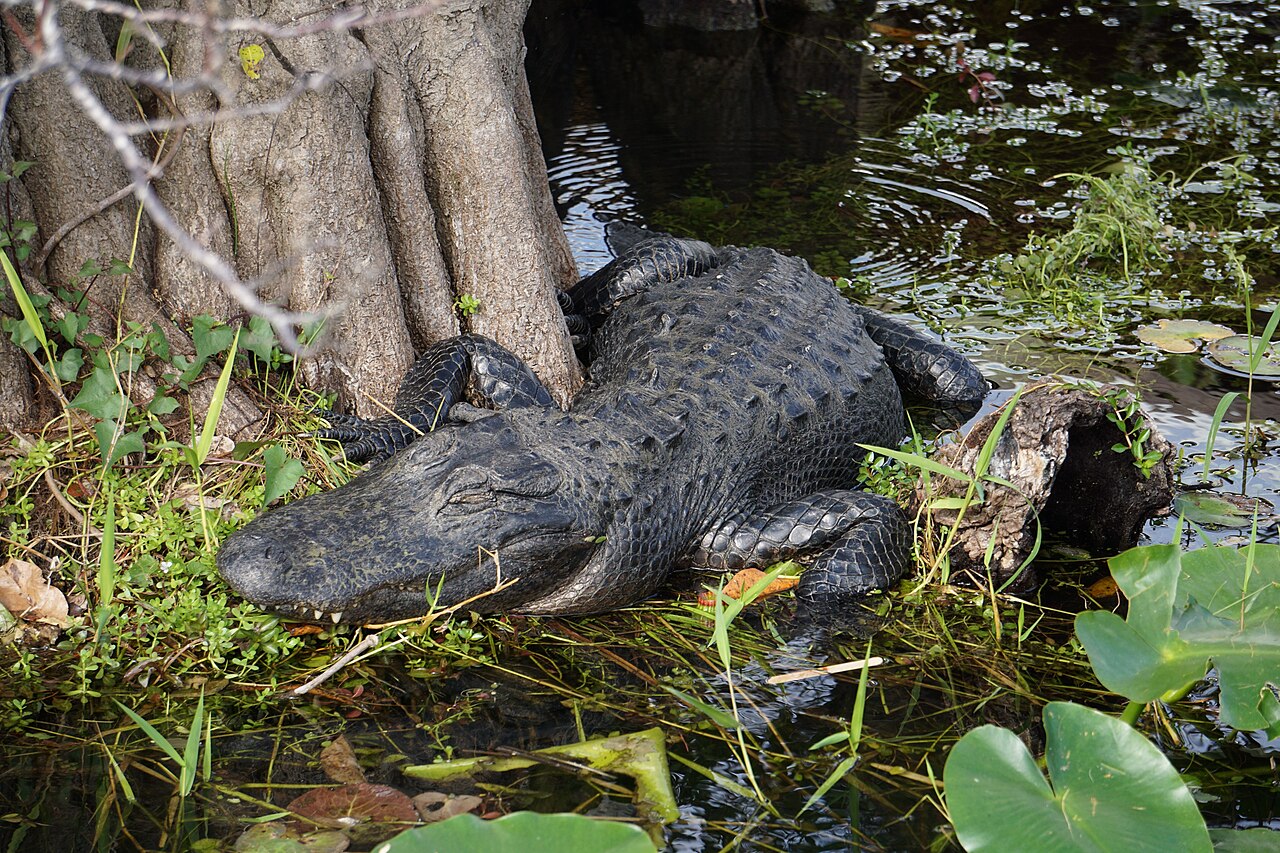
Photo: NPS / D. Diaz
Winter
South Florida is the only place on Earth where alligators and crocodiles live side by side.
Everglades: stay at least 15 feet (4.6 m) from alligators and crocodiles. If one hisses, you’re too close, even at 15 feet. Never feed them.
Of 23 crocodilian species in the world, only two are native to the U.S. — and South Florida is the only place both coexist.
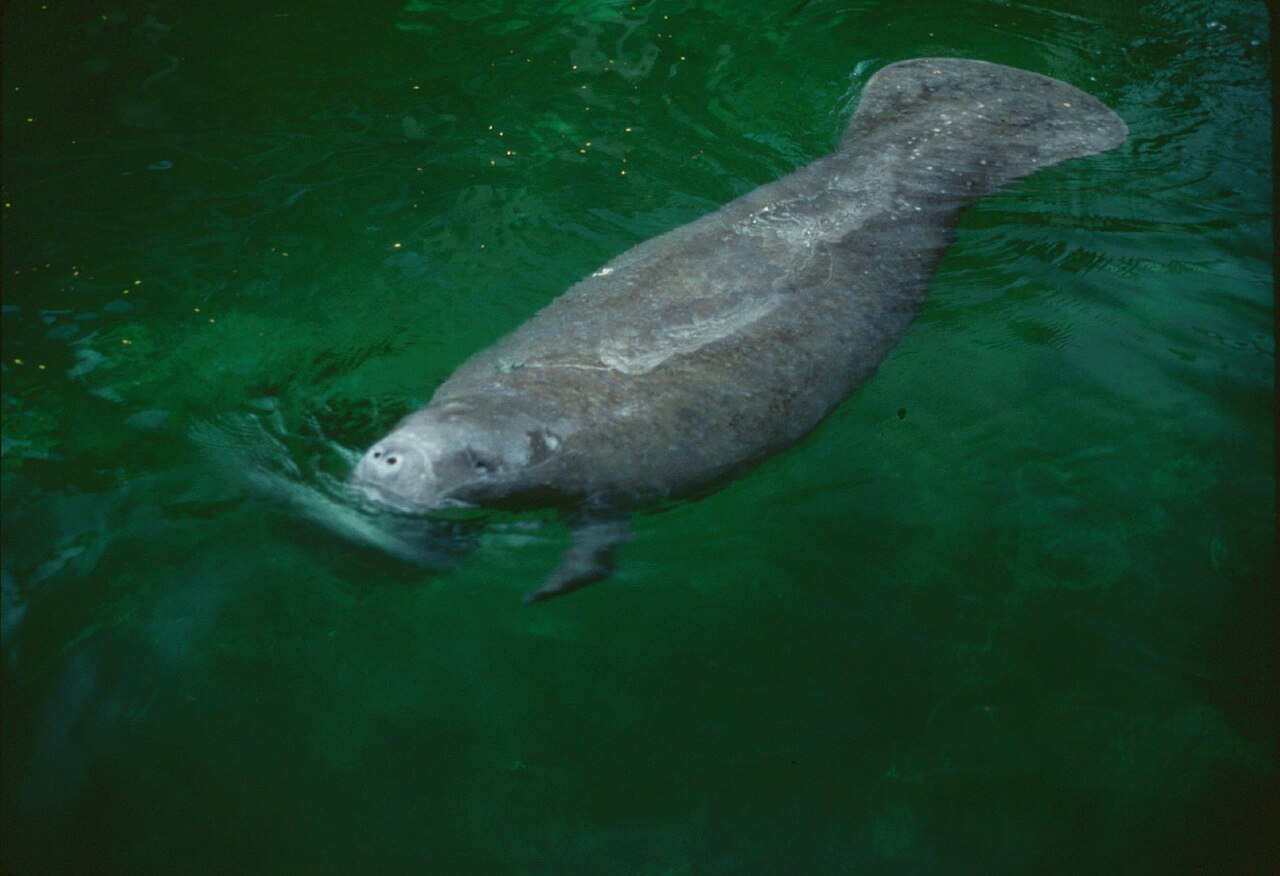
Photo: NPS
Colder months
Gentle “sea cows” that drift through warm, shallow park waters grazing on seagrass.
Look, don’t touch. Everglades asks boaters to slow to idle when manatees are near and never approach or harass them. Boat collisions are the primary cause of manatee deaths.
Manatees graze up to eight hours a day and can stay underwater for about 20 minutes while resting.
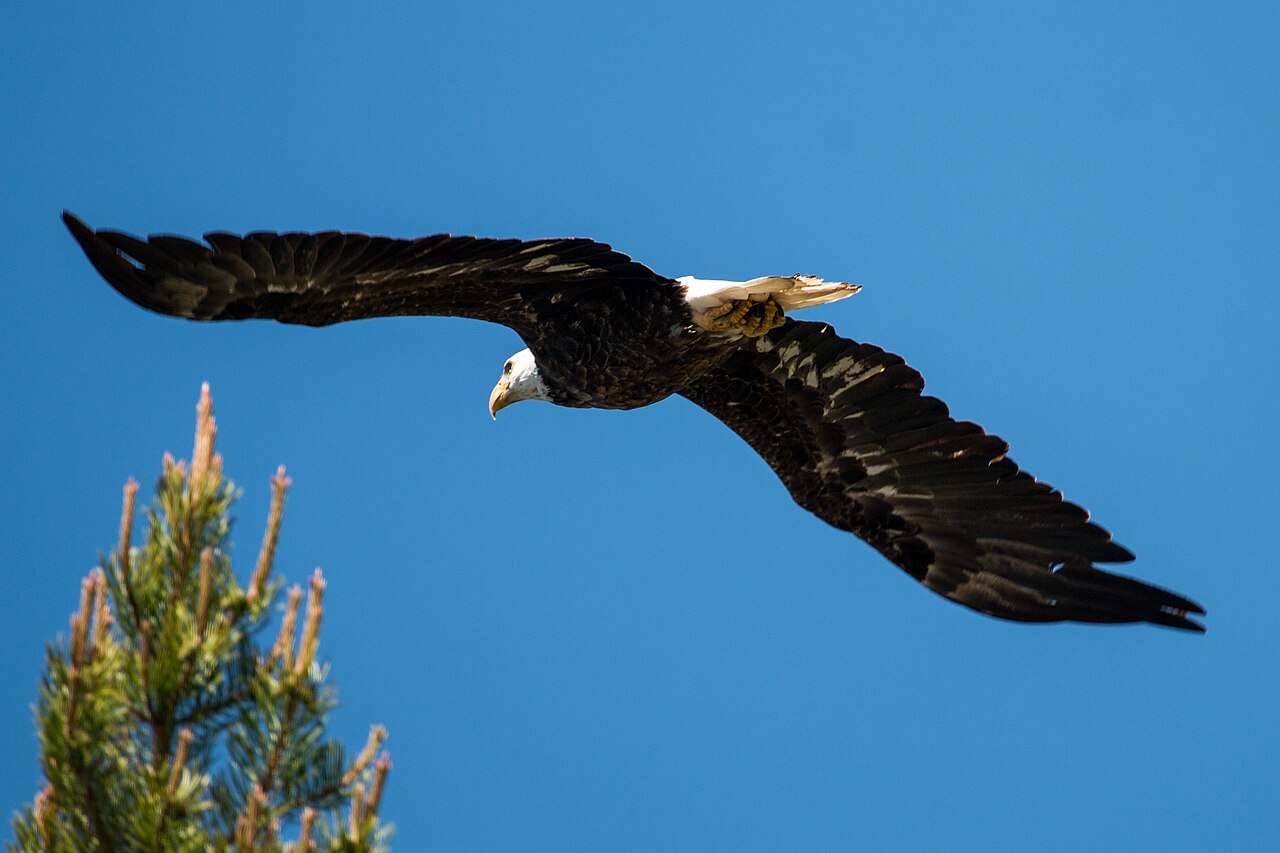
Photo: NPS / Adams
Year-round
The national bird is back, nesting along rivers and lakes from Ohio to Wyoming.
Stay at least 25 yards from wildlife (Grand Teton) and well back from nests. Voyageurs closes campsites within 500 meters of an active nest during breeding season.
Ohio had only four eagle nests in 1979. Today it has nearly 1,000.
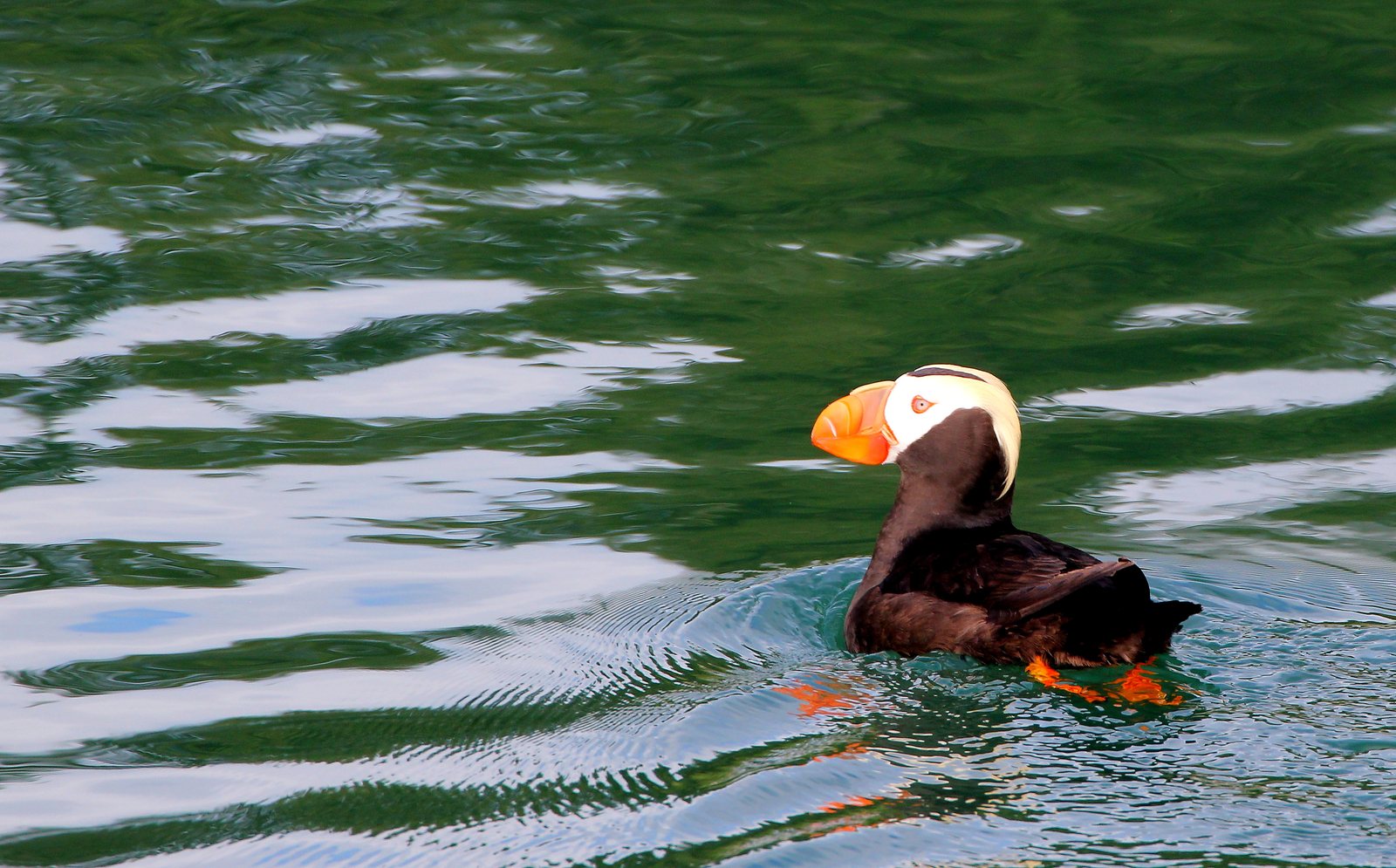
Photo: NPS / D. Morda
Mid-May–summer
Tufted puffins swim better than they fly — and sea otters float in the harbor before your tour even leaves.
Olympic requires at least 50 yards (half a football field) from any park wildlife. On a boat, let otters and puffins go about their business.
A sea otter has no blubber; instead its coat packs 600,000 to 1,000,000 hairs per square inch.
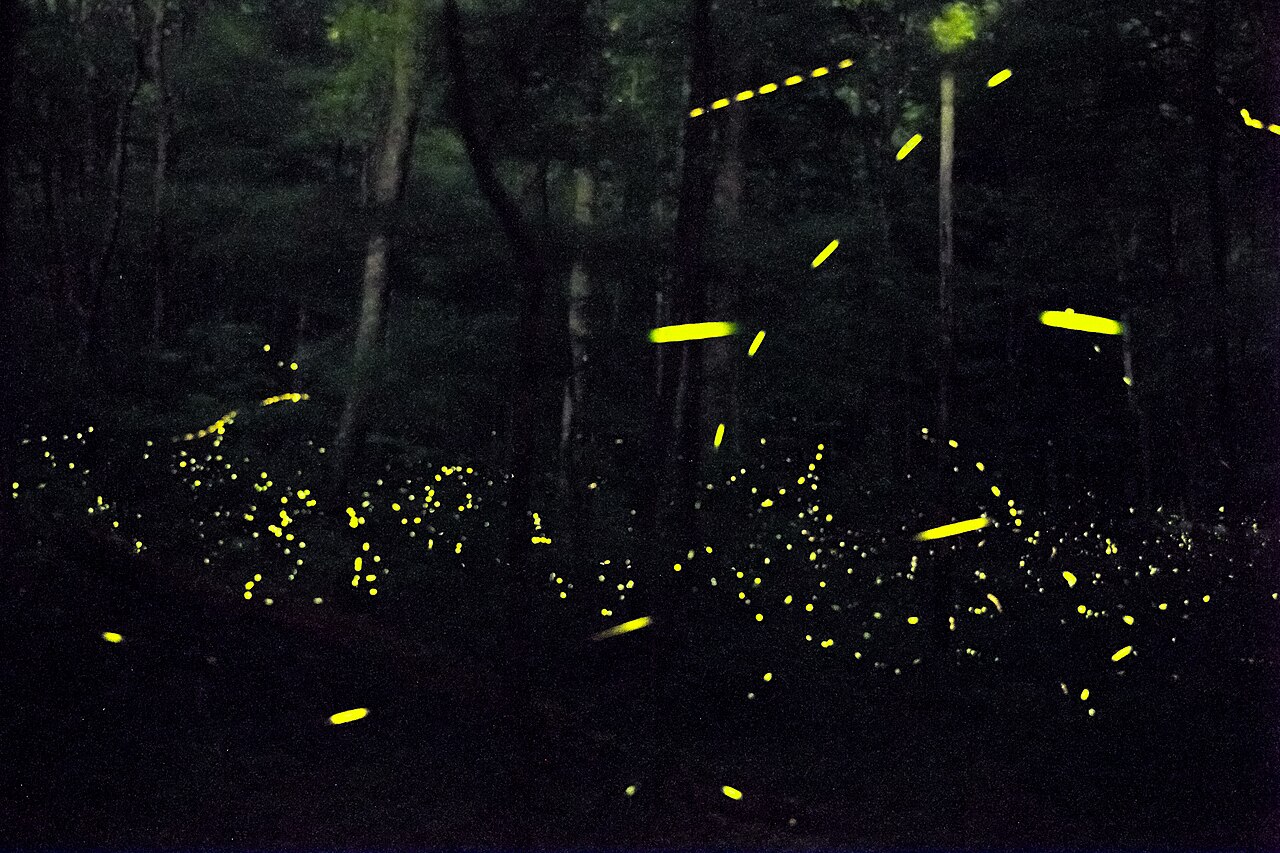
Photo: Niemand für Polyphemus / CC BY 2.0
Mid-May–June
Thousands of fireflies flashing in near-unison — one of the rarest light shows in nature.
Use only a red-filtered flashlight — cover it with red cellophane. Bright light disrupts the fireflies’ signals. Congaree bans phone use in the viewing area, even for photos.
Photinus carolinus flashes five to eight times, then goes dark for eight seconds. Only three North American species can fully synchronize.
Also worth the trip
Grand Teton · Great Sand Dunes
Mormon Row and Antelope Flats Road. Not a true antelope — and it can run up to 60 mph.
Grand Canyon · Zion · Pinnacles
In Zion, look above Angels Landing and Kolob Terrace Road near Lava Point. North America’s largest flying land bird.
Carlsbad Caverns
A huge colony flies out of Carlsbad Cavern every evening from spring through fall.
Kobuk Valley · Denali
Twice a year, about 250,000 caribou cross Kobuk Valley on a 600-mile migration.
Dry Tortugas · Biscayne
Large sea turtles haul onto Dry Tortugas’ protected beaches to bury their eggs.
Watch like a ranger
Animals feed most in the early morning and evening.
Watch from roadside pullouts. The safest, and often best, view is from inside your car.
Binoculars, a spotting scope or a long lens get you close without getting close.
Visitor centers know what’s been seen lately. Sightings are never guaranteed.